ताजा अपडेट और खबर
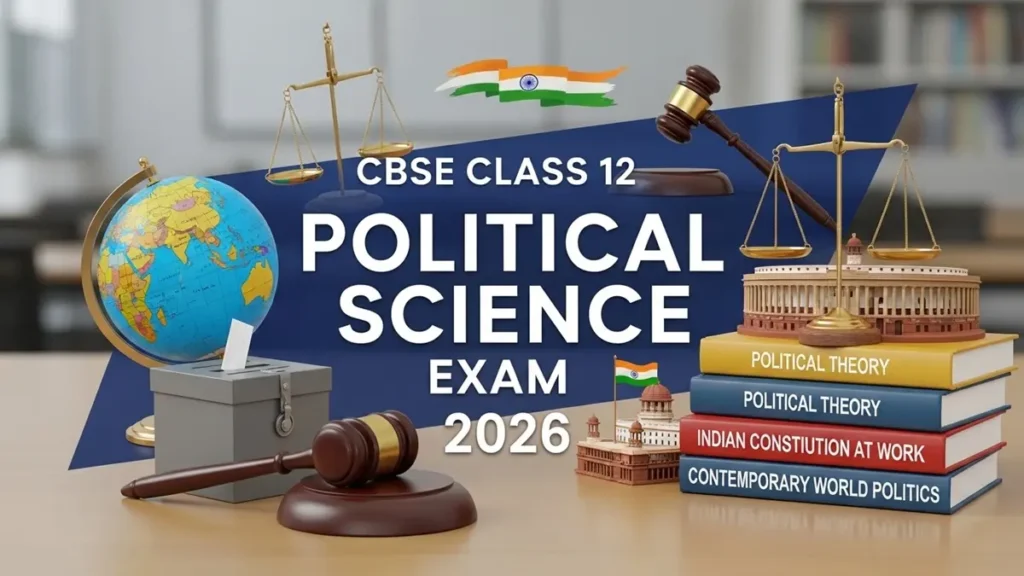
CBSE Class 12 Political Science Exam कल यानी 23 March 2026 को है — 10:30 AM से 1:30 PM। अगर आप आज रात last minute revision कर रहे हैं — तो यह article आपके लिए है। घबराने की जरूरत नहीं। सही topics, सही approach और smart exam strategy से आप अच्छे marks ला सकते हैं।
Political Science Class 12 में दो textbooks हैं — Contemporary World Politics (समकालीन विश्व राजनीति) और Politics in India since Independence (स्वतंत्रता के बाद का भारत)। दोनों से equally questions आते हैं। CBSE ने official sample paper 2025-26 जारी किया है — उसी के pattern पर exam होगी।
UP के Lucknow, Kanpur, Prayagraj, Meerut, Ghaziabad, Bareilly और Moradabad जैसे शहरों में CBSE affiliated schools के लाखों students कल यह exam देंगे। यह revision guide उन सभी के लिए है।
Exam Pattern 2025-26 — पहले यह समझें
Total Marks: 80 | Time: 3 hours | Questions: 30 (5 Sections)
- Section A — MCQs (12 Questions × 1 mark = 12 marks): Assertion-Reason, Match the Following, Competency-based MCQs — सभी compulsory
- Section B — Very Short Answer (6 Questions × 2 marks = 12 marks): 50-60 words में answer — सभी compulsory
- Section C — Short Answer (5 Questions × 4 marks = 20 marks): 100-120 words — 2 questions में internal choice
- Section D — Source/Map/Picture Based (3 Questions × 4 marks = 12 marks): Passage, Map या Picture देकर questions — सभी compulsory
- Section E — Long Answer (4 Questions × 6 marks = 24 marks): 170-180 words — सभी 4 में internal choice
Key Points:
- कोई negative marking नहीं — हर question attempt करें
- Section E (6 marks) में internal choice है — दोनों options पढ़कर जो अच्छा लगे वो choose करें
- Source-based questions में passage carefully पढ़ें — answer वहीं से मिलता है
Book 1 — Contemporary World Politics: Last Day Revision
Chapter 1: The Cold War Era (शीत युद्ध का दौर)
- Cold War क्या था: USA (West/Capitalist bloc) और USSR (East/Socialist bloc) के बीच ideological conflict — direct war नहीं, लेकिन proxy wars
- NATO vs Warsaw Pact: NATO — Western military alliance (1949)। Warsaw Pact — Soviet bloc (1955)
- Cuban Missile Crisis 1962: Near-nuclear war। USSR ने Cuba से missiles हटाए — Cold War का turning point
- Arms Race: दोनों superpowers का nuclear weapons बनाना — MAD (Mutually Assured Destruction)
- Non-Aligned Movement (NAM): India, Egypt, Yugoslavia — किसी bloc में नहीं। Nehru, Nasser, Tito के founders
Chapter 2: The End of Bipolarity (द्विध्रुवीयता का अंत)
- USSR का पतन: Mikhail Gorbachev — Glasnost (Openness) और Perestroika (Restructuring)। 1991 में USSR disintegrate।
- 15 नए देश: USSR टूटकर 15 republics बने। Russia सबसे बड़ा।
- Shock Therapy: Sudden transition from communist to capitalist economy। बड़े economic problems आए।
- CIS (Commonwealth of Independent States): Former Soviet republics का loose organization
Chapter 3: US Hegemony in World Politics
- 1991 के बाद US sole superpower: Military, Economic और Cultural dominance
- Operation Desert Storm 1991: First Gulf War — Iraq को Kuwait से निकाला
- 9/11 Attack 2001: Afghanistan में US military action — War on Terror
- Operation Iraqi Freedom 2003: Iraq War — WMDs की आड़ में
- India-US Relations: Civil Nuclear Deal 2008 — major milestone
Chapter 4: Alternative Centres of Power
- European Union (EU): Economic + political union। Single market, Euro currency, Common foreign policy।
- ASEAN: Association of South East Asian Nations — 1967। ASEAN Way — peaceful dialogue।
- China का rise: 1978 में Deng Xiaoping की Open Door Policy। Special Economic Zones।
- Mearsheimer Thesis vs Nye Thesis: China threat vs engagement debate।
Chapter 5: Contemporary South Asia (समकालीन दक्षिण एशिया)
- SAARC: South Asian Association for Regional Cooperation — 1985। India, Pakistan, Bangladesh, Sri Lanka, Nepal, Bhutan, Maldives, Afghanistan।
- India-Pakistan: Shimla Agreement 1972, Lahore Declaration 1999, Agra Summit 2001
- Bangladesh, Sri Lanka, Nepal: India के साथ relations के key points
Chapter 6: International Organisations
- UN (United Nations): 1945 में स्थापित। 6 main organs — General Assembly, Security Council, Secretariat, ICJ, ECOSOC, Trusteeship Council।
- Security Council: 5 Permanent members (P5) — US, UK, France, Russia, China। Veto power।
- India’s demand for UNSC permanent seat: Reform arguments — population, democracy, peacekeeping contributions।
- UN reforms की जरूरत क्यों: World has changed since 1945 — more democratic, more nations।
Chapter 7: Security in the Contemporary World
- Traditional vs Non-Traditional Security: Traditional — military threats। Non-traditional — terrorism, climate change, diseases, poverty।
- Human Security: State security से हटकर individual की security।
- Cooperative Security: UN Peacekeeping, NPT, CTBT।
Chapter 8: Environment and Natural Resources
- Earth Summit 1992 (Rio de Janeiro): UNFCCC, CBD, Agenda 21।
- Kyoto Protocol 1997: Developed countries को carbon emission कम करना। US ने sign नहीं किया।
- North-South Divide: Rich countries more emissions but poor countries more affected।
- India’s stand: Common but Differentiated Responsibilities।
Chapter 9: Globalisation (वैश्वीकरण)
- Definition: Movement of ideas, capital, commodities and people across borders।
- Causes: Technology, Internet, Free trade policies।
- WTO, IMF, World Bank: Global economic institutions।
- India and Globalisation: 1991 में LPG reforms (Liberalisation, Privatisation, Globalisation)।
- Debate: Economic benefits vs cultural homogenisation, inequality।
Book 2 — Politics in India since Independence: Last Day Revision
Chapter 1: Challenges of Nation Building
- Partition 1947: 1 crore displaced, 5-10 lakh killed। Religious violence।
- Princely States Integration: Sardar Patel का role। Hyderabad — Police Action 1948।
- Refugee rehabilitation और language reorganisation of states।
Chapter 2: Era of One-Party Dominance
- Congress System: 1952-1967 तक Congress का dominance — 3 General Elections में।
- Social Coalition: Muslims, Dalits, Tribals, women — Congress का broad base।
- 1967 Elections: Congress loses several states। Start of coalition era।
Chapter 3: Politics of Planned Development
- Planning Commission: Nehru’s vision — Soviet-inspired 5-year plans।
- Mixed Economy: Public + Private sectors together।
- Green Revolution: 1960s — Food security achieved। Punjab, Haryana में।
- Debate: Industrial vs Agricultural growth priority।
Chapter 4: India’s External Relations
- Nehru’s Foreign Policy: Non-Alignment, Panchsheel (5 Principles), Anti-colonialism।
- India-China War 1962: Nehru’s image damaged।
- India-Pakistan Wars: 1947, 1965, 1971 (Bangladesh Liberation)।
- 1974 Nuclear Test (Pokhran 1): India became nuclear power।
Chapter 5: Challenges to and Restoration of Congress System
- 1967 Defections: Aaya Ram Gaya Ram phenomenon।
- Grand Alliance 1971: Opposition united against Congress। Congress won with massive majority — “Garibi Hatao”।
- Congress Split 1969: Indira Gandhi vs Syndicate।
Chapter 6: The Crisis of Democratic Order
- JP Movement 1974: Jayaprakash Narayan के नेतृत्व में — corruption के against।
- Emergency 1975-77: Indira Gandhi ने Article 352 invoke किया। Press censorship, political arrests।
- 1977 Elections: Janata Party ने Congress को हराया — first non-Congress government।
- 44th Amendment 1978: Emergency powers को restrict किया।
Chapter 7: Rise of Popular Movements
- Chipko Movement: 1973, Uttarakhand। Women hugged trees to save forests। Sunderlal Bahuguna।
- Narmada Bachao Andolan: Medha Patkar। Big dam vs displacement।
- Dalit Panthers: Maharashtra, 1972 — against caste discrimination।
- TNMF, Farmers’ Movements: Agricultural rights।
Chapter 8: Regional Aspirations
- Punjab Crisis: Akali Dal, Anandpur Sahib Resolution, Operation Blue Star 1984, Rajiv-Longowal Accord।
- Kashmir: Accession 1947, Article 370, insurgency।
- Northeast: Mizoram insurgency, Assam movement (AASU)।
- Demands for Smaller States: Jharkhand, Chhattisgarh, Uttarakhand बने।
Chapter 9: Recent Developments in Indian Politics
- Mandal Commission 1980: 27% OBC reservation — VP Singh ने implement किया 1990 में। Massive protests।
- Ayodhya Issue: Babri Masjid demolition 1992। Communal violence।
- Coalition Era: 1989 से कोई single party majority नहीं — 1999 NDA, 2004 UPA।
- Economic Reforms 1991: PV Narasimha Rao + Manmohan Singh — LPG reforms।
- 2014 Elections: BJP absolute majority — end of coalition compulsion।
Exam Day Tips — Last Minute Strategy
आज रात (22 March):
- ऊपर दिए points को एक बार quickly read करें — यह सबसे important topics हैं
- 6 marks के chapters को priority दें — Cold War, Globalisation, Emergency, Coalition Politics
- Sample paper का structure एक बार देखें — 5 sections याद रहें
- रात 11 बजे से पहले सो जाएं — fresh mind से exam better होती है
कल सुबह (23 March):
- Admit Card, pen (minimum 2-3 blue/black pens), pencil और eraser confirm करें
- Exam center पर कम से कम 9:45-10:00 AM तक पहुँचें
- Exam hall में पहले 15 minutes question paper carefully पढ़ें — strategy बनाएं
Exam में answer writing strategy:
- 2 marks (50-60 words): 2-3 points। Short और crisp। Bullet points okay।
- 4 marks (100-120 words): Introduction + 3-4 points + conclusion। Headings use करें।
- 6 marks (170-180 words): Proper structure — Introduction (2-3 lines) + Main Body (4-5 points with explanation) + Conclusion (2-3 lines)।
- MCQs पहले solve करें — confidence बनता है
- Source-based questions में passage ध्यान से पढ़ें — answer वहीं है
- Time management: MCQs 20 min, 2-mark 20 min, 4-mark 30 min, Source-based 20 min, 6-mark 50 min = total 2.5 hours (30 min buffer)
Most Expected Questions — 6 Marks के लिए Prepare करें
इन topics से 6 marks के questions आने की सबसे ज्यादा probability है:
- Cold War Era: Cold War में India की Non-Aligned Movement की भूमिका। OR Cuban Missile Crisis का महत्व।
- End of Bipolarity: USSR के विघटन के कारण और परिणाम। OR Shock Therapy — advantages and disadvantages।
- Globalisation: Globalisation के positive और negative effects। OR India on Globalisation — 1991 reforms।
- Emergency 1975-77: Emergency की पृष्ठभूमि, कारण और परिणाम। OR JP Movement का significance।
- Regional Aspirations: Punjab crisis — causes and resolution। OR Kashmir issue — background।
- Coalition Politics: India में coalition era — 1989 से। OR Mandal Commission controversy।
Important Information Table — Exam at a Glance
| Section | Questions | Marks per Q | Total Marks | Word Limit |
|---|---|---|---|---|
| A — MCQ | 12 | 1 | 12 | — |
| B — Very Short Answer | 6 | 2 | 12 | 50-60 words |
| C — Short Answer | 5 | 4 | 20 | 100-120 words |
| D — Source/Map/Picture Based | 3 | 4 | 12 | As required |
| E — Long Answer | 4 | 6 | 24 | 170-180 words |
| Total | 30 | — | 80 | 3 Hours |
Students की आम गलतियां — Exam में इनसे बचें
- Word limit ignore करना: 2 marks में 200 words लिखने से extra marks नहीं मिलते। Time waste होता है। Stick to word limits।
- MCQ में guess करना: No negative marking है — हर MCQ attempt करें। 25% chance तो है।
- Internal choice दोनों attempt करना: Section C और E में internal choice है — सिर्फ एक option attempt करें।
- Source-based question में बाहर से लिखना: Source-based questions में answer passage से ही लें — बाहर से लिखने पर marks नहीं मिलते।
- Long answer में structure नहीं होना: 6 marks के answer में Introduction + Points + Conclusion जरूरी है। Bullet points और headings use करें।
- Dates और Names गलत लिखना: Historical dates और proper nouns carefully लिखें — “Mikhail Gorbachev” को “Gorbacho” लिखने पर marks कट सकते हैं।
Parents को किन बातों का ध्यान रखना चाहिए
- आज रात pressure मत डालें: Last night पर बच्चे को peaceful environment दें। Heavy revision force न करें।
- Admit Card confirm करें: Exam centre, time (10:30 AM), पहुँचने का route — सब confirm करें।
- सुबह healthy breakfast: Exam से पहले light और nutritious breakfast — glucose, dry fruits।
- Transport ready रखें: Traffic को consider करते हुए 9:30 AM तक निकलने का plan करें।
- UP Board Result April में, CBSE Result मई में — दोनों के बाद college admissions। पहले से planning के लिए UP के top colleges की जानकारी यहाँ देखें।
After Exam — आगे क्या?
Political Science exam के बाद अगले steps:
- CBSE Result 2026: May 2026 में expected — cbseresults.nic.in पर
- CUET UG 2026: 11-31 May 2026 — Political Science, History जैसे subjects वाले students BA (Hons) Political Science, BA LLB, BA History में admission के लिए CUET दें
- Allahabad University, Lucknow University, BHU — Arts में admission CUET UG से
- UPSC Civil Services: Political Science एक strong foundation subject है — IAS, IPS, IFS की preparation Class 12 से शुरू हो सकती है
- UP की top universities में BA, LLB, Political Science programs यहाँ देखें।
Students के अक्सर पूछे जाने वाले सवाल (FAQ)
Q1. CBSE Class 12 Political Science Exam 2026 कब है?
A. 23 March 2026 को — 10:30 AM से 1:30 PM। यानी कल। Admit Card और pen आज रात ही तैयार रख लें।
Q2. Political Science में कितने marks का paper है और कितने sections हैं?
A. Total 80 marks, 3 hours, 30 questions, 5 sections — Section A (MCQ 12m), B (2m×6=12m), C (4m×5=20m), D (Source-based 4m×3=12m), E (6m×4=24m)।
Q3. कौन से topics सबसे important हैं?
A. Cold War Era, End of Bipolarity, Globalisation (Book 1) और Emergency 1975-77, Coalition Politics, Regional Aspirations (Book 2) — ये सबसे ज्यादा weightage वाले chapters हैं।
Q4. Source-based questions में कैसे answer करें?
A. Passage को carefully 2 बार पढ़ें। Answer passage में ही होता है — बाहर से information add करने की जरूरत कम होती है। जो questions पूछे हैं उन्हें passage के हिसाब से answer करें।
Q5. क्या Political Science में negative marking है?
A. नहीं। CBSE Class 12 Political Science में कोई negative marking नहीं है। हर question attempt करें — especially MCQs।
Q6. 6 marks के answer में क्या structure होना चाहिए?
A. Introduction (2-3 lines) + Main Body में 4-5 points (headings के साथ, explanation के साथ) + Conclusion (2-3 lines)। Word limit: 170-180 words। Neat handwriting और organized presentation।
Q7. CBSE Result 2026 कब आएगा?
A. CBSE Class 12 Result 2026 May 2026 में expected है — cbseresults.nic.in पर। Result के बाद CUET UG 2026 (11-31 May) के scores से university admissions होंगी।
कल के CBSE Class 12 Political Science exam के लिए last-minute revision अब सबसे ज्यादा जरूरी है। अगर आप Strategic approach अपनाएंगे तो कम समय में भी अच्छे marks secure कर सकते हैं। Focus करें high-weightage chapters — Cold War, Globalisation, Emergency, और Coalition Politics — और उनके key points को bullet में revise करें। MCQs जल्दी solve करें, Source-based questions में passage को ध्यान से पढ़ें, और 6 marks के answers में structured writing (Introduction + Points + Conclusion) अपनाएं। Time management का ध्यान रखें और exam hall में confidence के साथ लिखें।
Important Official Links
| Purpose | Official Link |
|---|---|
| CBSE Official Website | cbse.gov.in |
| CBSE Sample Papers (Political Science) | cbseacademic.nic.in |
| CUET UG 2026 — NTA Official | nta.ac.in |
| CollegeDekhoup – UP Colleges Guide | Top Colleges in UP |
| CollegeDekhoup – UP University Guide | UP University Guide |
| CollegeDekhoup – UP Scholarship Guide | UP Scholarship जानकारी |
Our Commitment to Accuracy
CollegeDekho is committed to providing accurate and trustworthy information. Our editorial team consists of education experts who verify all facts and data.
Related News
UP Board 2026-27: कक्षा 9 से 12 तक सिर्फ NCERT और अधिकृत किताबें अनिवार्य, जानें नियम और सख्त कार्रवाई!
उत्तर प्रदेश माध्यमिक शिक्षा परिषद (UPMSP) ने शैक्षणिक सत्र 2026-27 के लिए एक बड़ा और…
Alert for UP NEET SS Doctors — NOC Delay Could Cost Your Seat!
ताजा अपडेट और खबर Uttar Pradesh के उन doctors के लिए एक urgent situation सामने…
UPTET 2026 Notification Out — OTR Mandatory, Fees Revised & Exam Dates Confirmed!
ताजा अपडेट और खबर UP के लाखों teacher aspirants के लिए 4 साल के लंबे…
Mirzapur University Admission 2026: 12वीं के बाद घर के पास ही मिलेगा Career Boost — जानिए क्यों यह मौका नहीं छोड़ना चाहिए
ताजा अपडेट और खबर उत्तर प्रदेश के मुख्यमंत्री Yogi Adityanath ने 18 मार्च 2026 को…