Supreme Court orders UGC to warn students against fake colleges after Etah case
By TUF News Desk · Published 18 October 2026 · 4 min read
Fact-checked against 2+ independent sources · Editorial policy
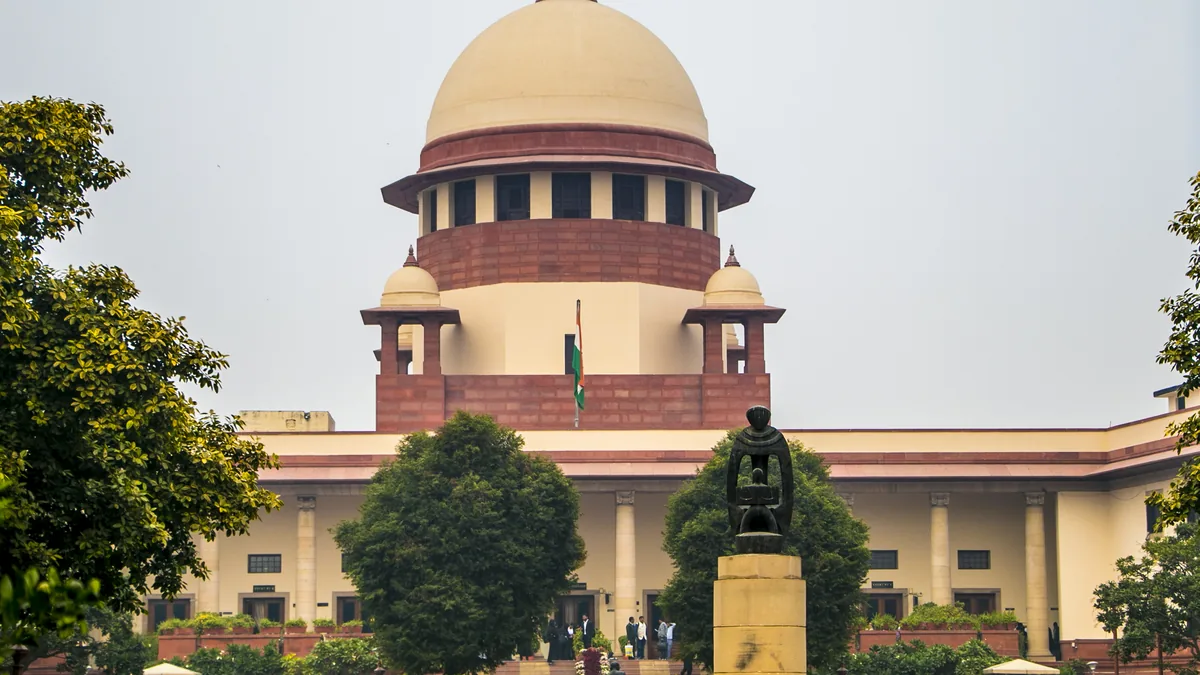
Two Supreme Court judges have ordered the University Grants Commission and every other higher-education regulator to issue public advisories warning students against fake colleges. The order came on October 9, 2026, from a bench of Justices Ahsanuddin Amanullah and N.V. Anjaria, after the court took note of an institution allegedly operating from a dilapidated building of two or three rooms in a field in Etah district, Uttar Pradesh.
A tea seller’s name on college documents
The case concerns Mahmudpur Nagariya village in Etah. A newspaper report published on September 1 first described the institution, which was allegedly offering DPharma, BPharma, BSc Nursing, BAMS, GNM, DMLT, BMLT and ANM courses without the required recognition or infrastructure.
The man named as the institution’s chairman, Bhagwan Das Singh Baghel, is a tea seller with limited formal education. During questioning, he reportedly told the police that the institution belonged to Satendra Kumar and that his role was limited to signing documents related to it.
Additional Solicitor General K.M. Nataraj, appearing for the Uttar Pradesh government, told the bench that police action was underway against Satendra Kumar and three others, and that an independent investigation had been ordered.
What the court directed
The court accepted the UP government’s suggestion that the UGC issue an advisory, and went further. It directed the UGC and regulatory bodies to issue public advisories urging students, institutions and the public to verify an institution’s recognition and authenticity before taking admission or dealing with it.
The advisories, the court said, must urge students and parents to thoroughly verify recognition before enrolling. The bench also asked the Centre to monitor whether regulatory authorities were issuing periodic warnings, and directed the UGC to formulate concrete guidelines to prevent such incidents in the future.
How the case reached the court
The fake-college matter surfaced during suo motu proceedings in which the court is examining alleged irregularities in the functioning of private and deemed universities. The proceedings began on a petition filed by a student of Amity University Noida. Details of the Etah case were placed before the court on an interlocutory application filed by Dr R.M. Sharma, whom the court had nominated to assist it on the functioning of educational institutions.
A Tribune editorial on October 13 noted the regulatory gap the case exposed: warnings issued after a scam comes to light cannot substitute for effective supervision.
What students should check before paying fees
The direction matters for anyone applying this admission season. Before paying admission fees, verify the institution, the course and the authority under which the qualification is awarded. The UGC maintains a list of fake universities on its official portal, at the official UGC fake-university page.
For professional courses, the check goes one level deeper: a college may be legitimate as an institution while its specific course lacks approval from the field regulator. Medical colleges fall under the National Medical Commission, pharmacy under the Pharmacy Council of India, nursing under the Indian Nursing Council, and Ayurveda and Unani courses under the NCISM. Our guide to choosing a university in India walks through the recognition checks step by step.
Frequently asked questions
What did the Supreme Court order on October 9, 2026?
A bench of Justices Ahsanuddin Amanullah and N.V. Anjaria directed the UGC and all regulatory authorities to issue public advisories warning students, institutions and the public to verify the authenticity of educational institutions before admission, and asked the Union government to communicate the order to regulators and monitor compliance.
What was the Etah case that triggered the order?
An institution in Mahmudpur Nagariya village, Etah district, allegedly operated from a dilapidated building of two or three rooms in a field and offered pharmacy, nursing and Ayurveda courses without the required recognition. Police action is underway against Satendra Kumar and three others, and an independent investigation has been ordered.
Where can students verify a university’s status before admission?
On the UGC’s official fake-universities list at ugc.gov.in, and with the relevant professional regulator for the specific course, such as the NMC for medical colleges, PCI for pharmacy and INC for nursing.
Frequently asked questions
What did the Supreme Court order on October 9, 2026?
A bench of Justices Ahsanuddin Amanullah and N.V. Anjaria directed the UGC and all regulatory authorities to issue public advisories warning students against unverified institutions, and asked the Union government to monitor compliance.
What was the Etah case that triggered the order?
An institution in Mahmudpur Nagariya village, Etah district, allegedly operated from a dilapidated building of two or three rooms in a field and offered pharmacy, nursing and Ayurveda courses without the required recognition. Police action is underway against Satendra Kumar and three others, and an independent investigation has been ordered.
Where can students verify a university's status before admission?
On the UGC's official fake-universities list at ugc.gov.in, and with the relevant professional regulator for the specific course, such as the NMC for medical colleges, PCI for pharmacy and INC for nursing.
Sources: ABP Live, The Tribune, LawChakra