Odisha: 7 of 17 public universities hold no valid NAAC grade as of November 1
By TUF News Desk · Published 2 November 2026 · 4 min read
Fact-checked against 2+ independent sources · Editorial policy
Seven of Odisha’s 17 general public universities have no valid accreditation grade as of November 1, according to the National Assessment and Accreditation Council (NAAC). Ten hold a valid grade. The figures, reported on November 2, put a number on a gap the state has been talking about for years.
Six of the seven have never been accredited at all. They are Odia University, Maa Manikeswari University, Vikram Dev University, Rajendra University, Dharanidhar University and MS Law University. The seventh, Jagannath Sanskrit University, was accredited once and has not renewed its grade.
NAAC is an autonomous body under the University Grants Commission. Its grades usually stay valid for five years, so a university has to go through reassessment to keep one. A university can slip off the accredited list simply by letting a grade lapse.
Why the gap persists
The reasons given are plain enough. Newer universities such as Dharanidhar and Vikram Dev do not have the faculty strength to put together an accreditation case. Across the state’s 17 universities, at least 1,435 faculty posts are vacant. The higher education department has asked universities to fill those posts by the end of November, but that deadline will be hard to meet in full.
Colleges face a different version of the same problem. Most of Odisha’s 1,058 degree colleges do not have a regular principal. In-charge and ad hoc principals often lack the standing to push through the long documentation work accreditation demands: detailed academic and administrative records, a self-study report, and a working internal quality assurance cell. Fakir Mohan University vice-chancellor Santosh Tripathy told The Times of India that accreditation is a collective activity and leadership matters, and he favoured tenure-based appointments for principals as one way to fix the problem.
The college numbers are worse than the university numbers. Higher education minister Suryabanshi Suraj told the Assembly last year that 477 of the state’s 714 government and aided degree colleges did not have valid NAAC accreditation. Counting every category of institution, the UGC puts the total number of accredited institutions in Odisha at 349.
Accreditation is voluntary. No rule forces a university to seek a grade, so an institution short on staff can keep putting it off. The cost is quiet but real: academics quoted in the report said a valid grade helps institutions meet eligibility requirements for certain research grants, development funds and government assistance.
The other side of the list
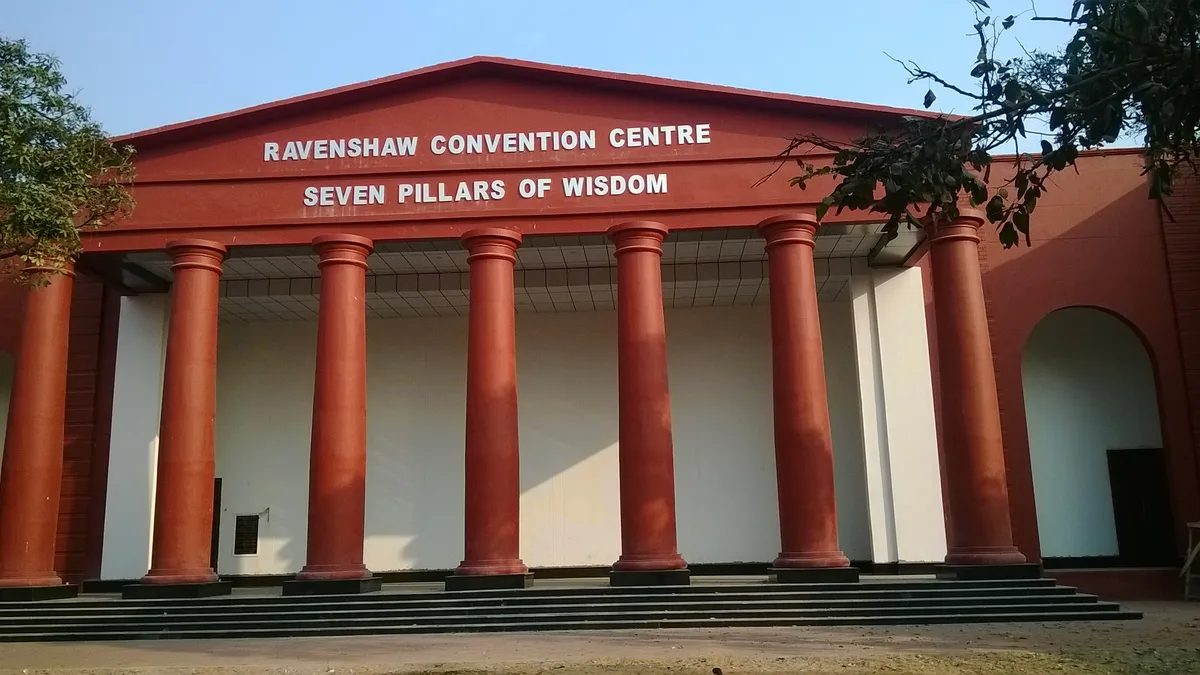
The ten universities with valid grades include the state’s older names. Ravenshaw University in Cuttack holds an A++ grade, the highest in the state, earned in November 2023. Utkal University in Bhubaneswar and Sambalpur University are also on the accredited side of the list, along with Berhampur University.
There has been some movement. In March 2025, eight public universities lacked a valid grade. Gangadhar Meher University in Sambalpur picked up a B++ grade in June 2025, bringing the count down to seven. That is slow progress, but it shows the list can move when an institution completes the process.
For students, the practical point is narrower than the headline. A NAAC grade is an independent check on standards, and it is worth looking up before applying. It sits alongside other checks. Our guide to choosing a university in India sets out what to look at beyond a grade, from course structure to faculty strength. Our guide to NIRF rankings explains how accreditation differs from a ranking, since the two often get mixed up. The NAAC website publishes accredited institutions, and the UGC website lists recognised universities, so both can be checked directly.
The next test is the November faculty deadline. If universities fill even part of the 1,435 vacant posts, the seven unaccredited institutions will have a stronger case to start the accreditation process. If they do not, the same names are likely to appear on the next list too.
Frequently asked questions
How many Odisha public universities lack a valid NAAC grade?
Seven of the state’s 17 general public universities have no valid NAAC grade as of November 1, 2026. Ten hold a valid accreditation.
Which Odisha universities have never been accredited by NAAC?
Odia University, Maa Manikeswari University, Vikram Dev University, Rajendra University, Dharanidhar University and MS Law University have never been accredited. Jagannath Sanskrit University has not renewed its earlier accreditation.
Why do these universities lack NAAC accreditation?
Staff shortages and leadership gaps are cited as the main reasons. At least 1,435 faculty posts are vacant across the state’s 17 universities, and most of its 1,058 degree colleges do not have regular principals.
Does NAAC accreditation matter for students choosing a university?
A valid grade is an independent check on academic and administrative standards, and it can affect an institution’s eligibility for certain research grants, development funds and government assistance. It sits alongside checks of courses, faculty and placements.
Frequently asked questions
How many Odisha public universities lack a valid NAAC grade?
Seven of the state's 17 general public universities have no valid NAAC grade as of November 1, 2026. Ten hold a valid accreditation.
Which Odisha universities have never been accredited by NAAC?
Odia University, Maa Manikeswari University, Vikram Dev University, Rajendra University, Dharanidhar University and MS Law University have never been accredited. Jagannath Sanskrit University has not renewed its earlier accreditation.
Why do these universities lack NAAC accreditation?
Staff shortages and leadership gaps are cited as the main reasons. At least 1,435 faculty posts are vacant across the state's 17 universities, and most of its 1,058 degree colleges do not have regular principals.
Does NAAC accreditation matter for students choosing a university?
A valid grade is an independent check on academic and administrative standards, and it can affect an institution's eligibility for certain research grants, development funds and government assistance. It sits alongside checks of courses, faculty and placements.
Sources: The Times of India, Odisha TV, The New Indian Express