J&K notifies private university rules: 25% seats and jobs reserved for local domiciles
By TUF News Desk · Published 7 November 2026 · 4 min read
Fact-checked against 2+ independent sources · Editorial policy
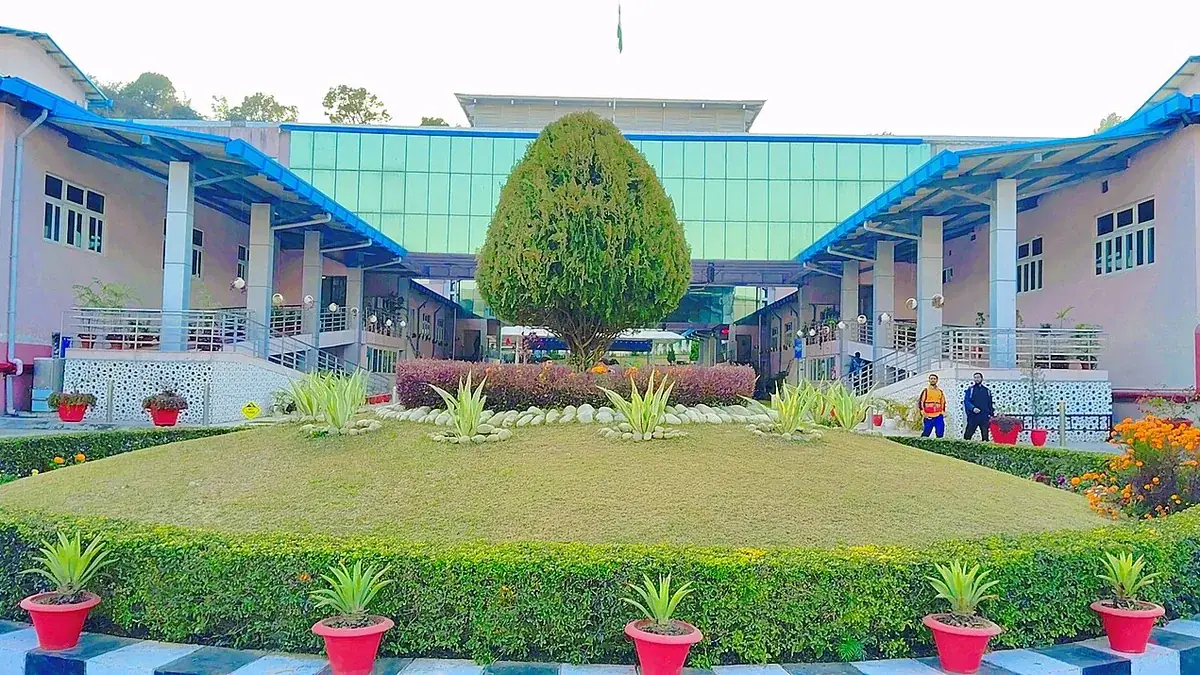
A student from Jammu who wants to study at a private university close to home has, until now, had to look outside the Union Territory. That is about to change. The Jammu and Kashmir government has notified the Jammu and Kashmir Private Universities Rules, 2026, opening the door for private universities to set up campuses in the Union Territory under a dedicated regulatory framework.
The Higher Education Department notified the rules under the Jammu and Kashmir Private Universities Act, 2026, after Lieutenant Governor Manoj Sinha assented to the Bill passed in the Budget Session earlier this year. Chief Minister Omar Abdullah welcomed the notification and said it should draw reputed national and international institutions to Jammu and Kashmir.
What the 25% quota covers
The headline provision is a reservation for local residents. Every private university must set aside at least 25% of its sanctioned intake in each programme, and 25% of teaching and non-teaching posts, for Jammu and Kashmir domicile holders.
Category-wise division within the quota follows the Jammu and Kashmir Reservation Act, 2004, the Reservation Rules, 2005, and the Domicile Certificate (Procedure) Rules, 2020. The rules also require private universities to give merit-cum-means scholarships to at least 10% of their total student intake, a provision aimed at students from economically weaker families.
Fees, accreditation and non-profit status
The framework puts limits on how private universities can charge students. Capitation fees are prohibited, and the rules include safeguards for fee regulation. Every private university must obtain accreditation within five years of starting.
Universities must run on a non-profit basis, with no financial assistance or subsidies from the government. Faculty salaries, allowances and service conditions must conform to the standards of the University Grants Commission.
How a new university gets approved
A sponsoring body must be a registered society, a public trust or a Section 8 company, registered for at least three years before applying.
Approvals run to a fixed timetable: preliminary scrutiny within 30 days, detailed examination by an Expert Committee, and a decision by the Minister Incharge of Higher Education within 30 days of the committee’s recommendations.
Each university will be unitary, with its main campus in Jammu and Kashmir. It cannot affiliate outside colleges, but can open constituent colleges, regional centres, additional campuses and study centres inside the Union Territory, subject to UGC guidelines.
Who will watch over the new universities
A dedicated Regulatory Authority will supervise the institutions, headed by a retired IAS officer of at least Commissioner Secretary rank with experience in higher education administration, public policy, institutional governance or regulatory administration.
The Authority will monitor admissions, fees, infrastructure, finances and academic standards, with stringent penalties for violations such as irregular admissions, excess fee collection, invalid degrees, faculty shortfalls and poor infrastructure.
What it means for students
The framework envisages private universities in disciplines such as STEM, medicine, law, business studies and liberal arts. For students, that means more choice closer to home, with a guaranteed share of seats for local domiciles and scholarships for a tenth of the intake.
Until now, higher education in the Union Territory has run through public institutions such as the Indian Institute of Technology Jammu, the University of Jammu and the University of Kashmir. Private universities will now sit alongside them. Students comparing the new options can use our guide on how to choose a university in India.
No private university has been named yet, and no campus has been announced.
Frequently asked questions
What is the domicile quota under the new J&K private university rules?
At least 25% of seats in each programme and 25% of teaching and non-teaching posts, for candidates holding a Jammu and Kashmir domicile certificate.
Do private universities in J&K have to offer scholarships?
Yes. The rules require merit-cum-means scholarships for at least 10% of a university’s total student intake.
Can private universities in J&K charge capitation fees?
No. The framework prohibits capitation fees, includes safeguards for fee regulation, and requires accreditation within five years.
When can private universities start operating in J&K?
The rules were notified in November 2026, and sponsoring bodies can now apply. Preliminary scrutiny of an application must finish within 30 days.
Frequently asked questions
What is the domicile quota under the new J&K private university rules?
Private universities must reserve at least 25% of seats in each programme and 25% of teaching and non-teaching posts for candidates holding a Jammu and Kashmir domicile certificate.
Do private universities in J&K have to offer scholarships?
Yes. The rules require merit-cum-means scholarships for at least 10% of a university's total student intake.
Can private universities in J&K charge capitation fees?
No. The framework prohibits capitation fees, includes safeguards for fee regulation, and requires accreditation within five years.
When can private universities start operating in J&K?
The rules were notified in November 2026. Sponsoring bodies can now apply to set up a university, and the government must complete preliminary scrutiny of an application within 30 days.
Sources: Kashmir Life, Daily Excelsior, IANS