IIT Madras will map 100 human brains in 3D; PM Modi dedicated the centre on Oct 11
By TUF News Desk · Published 13 October 2026 · 3 min read
Fact-checked against 2+ independent sources · Editorial policy
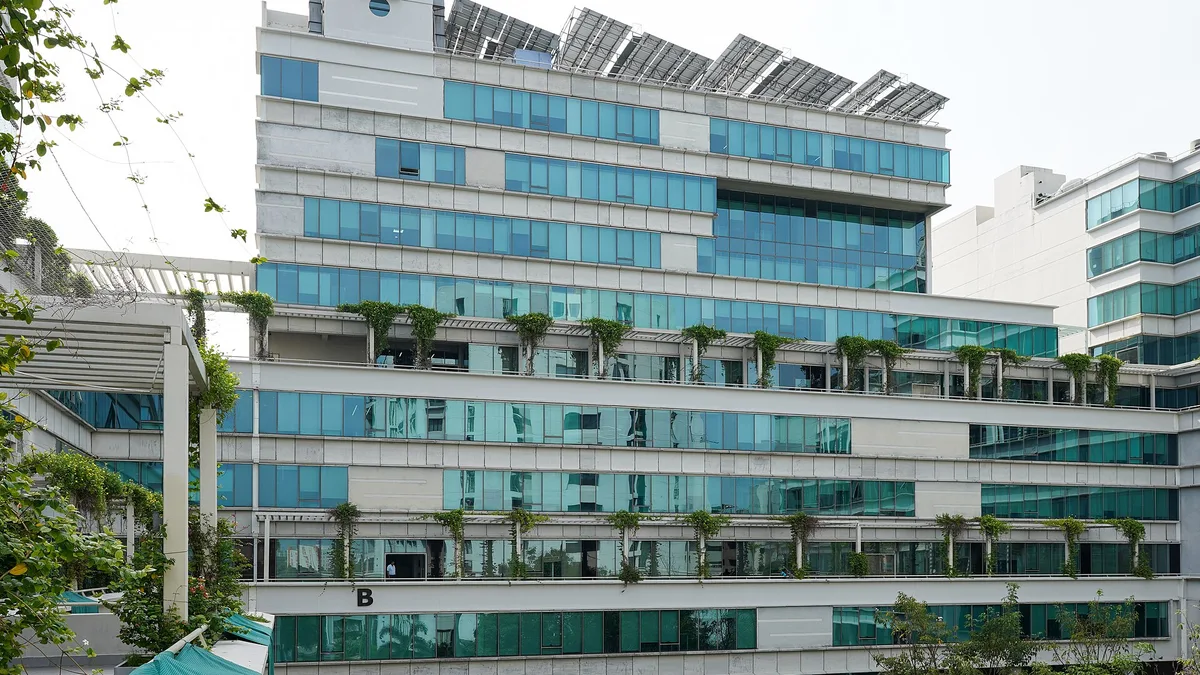
On Sunday, October 11, Prime Minister Narendra Modi dedicated the Sudha Gopalakrishnan Brain Centre (SGBC) at IIT Madras to the nation, setting in motion a mission to map more than 100 human brains in three dimensions, cell by cell.
The mission will create 3D digital atlases of more than 100 post-mortem human brains at cellular resolution, covering the full span of life from the foetal stage to old age and including brains affected by disease. IIT Madras says the collection will be the largest set of whole-human-brain maps at cell resolution in the world. The atlases will be made publicly available through the centre’s image visualisation and computing framework, so researchers and doctors outside India can use them as well.
Modi also released C-STROKE the same day, which the institute describes as the world’s first 3D atlas of a human brain affected by ischaemic stroke. The atlas contains more than 1,000 annotated sections that connect MRI scans taken before death, at millimetre resolution, with microscopic images of brain tissue at micron resolution. It maps cellular markers of neuronal health, neuroinflammation, blood-brain barrier disruption, hypoxia and axonal injury. That pairing lets researchers study the microscopic changes behind patterns that show up on ordinary clinical scans.
How the maps are built
The centre turns whole post-mortem human brains into digital maps using a high-throughput brain imaging and computing platform developed at the institute. The computing behind the maps ran on the Param Shakti supercomputer, with support from the Ministry of Electronics and Information Technology (MeitY).
Who is working on it
More than 200 researchers, engineers and technicians at the centre are part of the effort, along with more than 10 medical institutions across India and over 30 researchers from more than 10 countries. The research has philanthropic support from Fairfax Financial chairman Prem Watsa, who is an IIT Madras alumnus, and Infosys co-founder Kris Gopalakrishnan.
What it means for students
Programmes like this are worth watching for students weighing research careers. Brain mapping pulls together neuroscience, electrical engineering, imaging technology, supercomputing and machine learning on a single problem, which is the kind of interdisciplinary mix research institutes are hiring into. When comparing institutes on research strength, our NIRF rankings guide breaks down what the numbers actually measure.
The centre publishes its work on the official SGBC website.
Frequently asked questions
What did PM Modi launch at IIT Madras on October 11, 2026?
He dedicated the Sudha Gopalakrishnan Brain Centre to the nation, launched a mission to build 3D cell-resolution atlases of 100+ human brains, and released C-STROKE, the world’s first 3D atlas of a human ischaemic stroke brain.
What is C-STROKE?
It is the world’s first 3D atlas of a human ischaemic stroke brain. It has more than 1,000 annotated sections that link MRI scans taken before death with microscopic images of brain tissue, mapping markers of neuronal health, neuroinflammation, blood-brain barrier disruption, hypoxia and axonal injury.
Will the brain atlases be available to other researchers?
Yes. IIT Madras says the atlases will be made publicly available through the centre’s image visualisation and computing framework, so researchers and doctors anywhere in the world can use them.
Who is backing the Sudha Gopalakrishnan Brain Centre?
The research has philanthropic support from Fairfax Financial chairman Prem Watsa, an IIT Madras alumnus, and Infosys co-founder Kris Gopalakrishnan. The centre is named after Sudha Gopalakrishnan.
Frequently asked questions
What did PM Modi launch at IIT Madras on October 11, 2026?
He dedicated the Sudha Gopalakrishnan Brain Centre to the nation, launched a mission to build 3D cell-resolution atlases of 100+ human brains, and released C-STROKE, the world-first 3D atlas of a human ischaemic stroke brain.
What is C-STROKE?
It is the world-first 3D atlas of a human ischaemic stroke brain. It has more than 1,000 annotated sections that link MRI scans taken before death with microscopic images of brain tissue.
Will the brain atlases be available to other researchers?
Yes. IIT Madras says the atlases will be made publicly available through the brain centre image visualisation and computing framework for researchers and doctors worldwide.
Who is backing the Sudha Gopalakrishnan Brain Centre?
The research has philanthropic support from Fairfax Financial chairman Prem Watsa, an IIT Madras alumnus, and Infosys co-founder Kris Gopalakrishnan. The centre is named after Sudha Gopalakrishnan.
Sources: DT Next, Medical Dialogues, The New Indian Express