IIT Madras to map 100 human brains in 3D; PM Modi releases world's first stroke atlas
By TUF News Desk · Published 15 October 2026 · 3 min read
Fact-checked against 2+ independent sources · Editorial policy
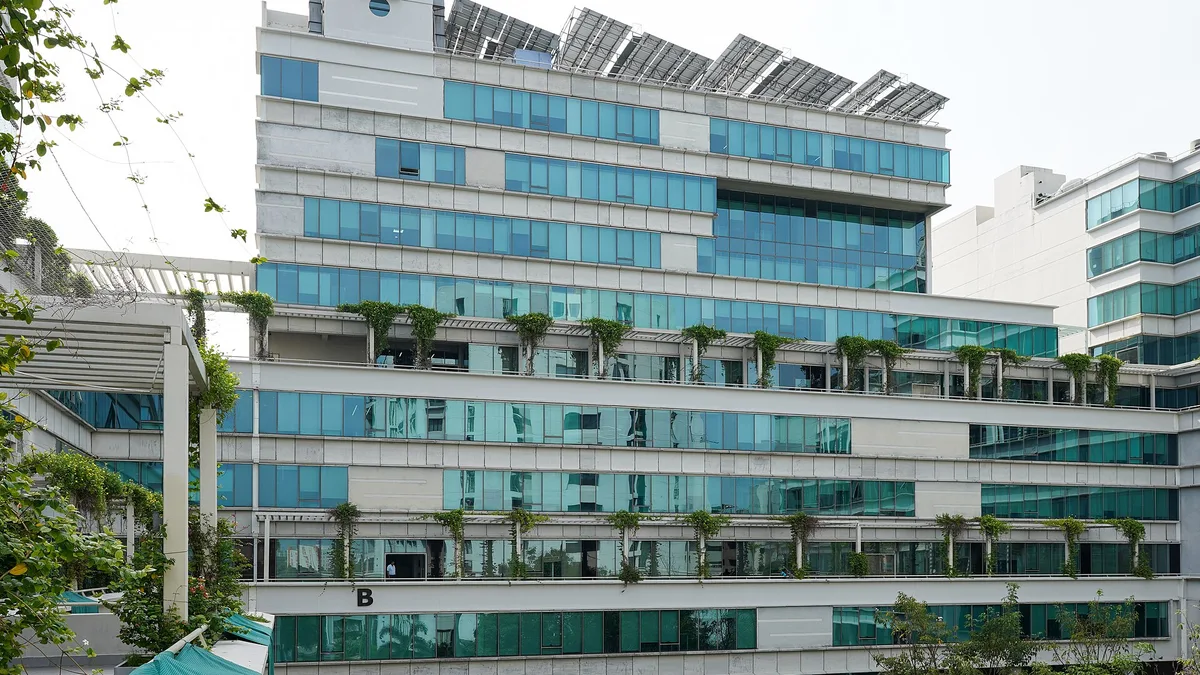
The Indian Institute of Technology Madras has begun an ambitious neuroscience mission: three-dimensional digital maps of more than 100 human brains, each captured down to the level of individual cells.
Prime Minister Narendra Modi dedicated the Sudha Gopalakrishnan Brain Centre (SGBC) at IIT Madras to the nation during his visit to the institute on October 11, 2026. He also launched the centre’s mapping mission and released C-STROKE, described by the institute as the world’s first three-dimensional atlas of a human brain affected by ischaemic stroke.
What the mission covers
The mission will span the whole human lifespan, from the foetal stage to old age. It will include brains affected by disease, so researchers can compare how healthy and damaged brains differ cell by cell. IIT Madras says the result will be the largest collection of whole-human-brain 3D maps at cell resolution anywhere.
The centre works with whole post-mortem human brains. Its high-throughput imaging platforms process each brain into digital 3D maps, which it releases through a multi-modal visualisation and computing platform that researchers and clinicians anywhere in the world can use to study brain structure and disease.
C-STROKE: the first disease atlas
C-STROKE is the first disease-focused resource to come out of the programme. Its key feature is the pairing it makes between two scales of observation. Clinical MRI scans taken before death show abnormalities at roughly the millimetre scale, while microscopic examination of the same brain after death shows individual cells and tissue organisation. The atlas aligns the two, so researchers can study how the patterns a doctor spots on a scan line up with damage inside the tissue itself.
More than 1,000 annotated sections from a stroke-affected brain make up the atlas. The annotations document cellular markers linked to neuronal health, neuroinflammation, blood-brain barrier disruption, hypoxia and axonal injury. Ischaemic stroke is the type caused by a blocked blood vessel that cuts off blood supply to part of the brain, and this is the first atlas to map its effects at this level of detail.
The resource is open access. Researchers may use it to examine how neuronal injury, inflammation, barrier disruption, oxygen deprivation and nerve-fibre damage are distributed within stroke-affected tissue, and to test whether particular microscopic patterns correspond to features seen on MRI scans.
Who is behind it
The effort involves more than 200 researchers, engineers and technicians at the brain centre, over 10 medical institutions across India and more than 30 researchers from over 10 countries. C-STROKE was developed with philanthropic support from IIT Madras distinguished alumnus V. Prem Watsa, the chairman of Fairfax Financial.
Modi said the centre marks an important step towards advancing cutting-edge research and innovation in healthcare. Details of the launch were also shared in IIT Madras’s official announcement.
For students comparing institutes, research output of this scale is one of the signals that sits alongside placements and fees. Our guide to NIRF rankings explains what each parameter measures when institutes are judged nationally.
Frequently asked questions
What is C-STROKE?
C-STROKE is the world’s first three-dimensional atlas of a human brain affected by ischaemic stroke, released by the Sudha Gopalakrishnan Brain Centre at IIT Madras. It combines pre-mortem MRI scans with post-mortem microscopic imaging across more than 1,000 annotated brain sections.
How many brains will the IIT Madras mission map?
More than 100 human brains across the human lifespan, from the foetal stage to old age, including brains affected by neurological disease. IIT Madras describes it as the largest collection of whole-brain 3D maps at cell resolution.
Who can access these brain atlases?
They are being released as open-access digital resources for researchers and clinicians worldwide through the centre’s digital platform.
Who funded C-STROKE?
The atlas was developed with philanthropic support from IIT Madras distinguished alumnus V. Prem Watsa, the chairman of Fairfax Financial.
Frequently asked questions
What is C-STROKE?
C-STROKE is the world's first three-dimensional atlas of a human brain affected by ischaemic stroke, released by the Sudha Gopalakrishnan Brain Centre at IIT Madras. It combines pre-mortem MRI scans with post-mortem microscopic imaging across more than 1,000 annotated brain sections.
How many brains will the IIT Madras mission map?
More than 100 human brains across the human lifespan, from the foetal stage to old age, including brains affected by neurological disease. IIT Madras describes it as the largest collection of whole-brain 3D maps at cell resolution.
Who can access these brain atlases?
They are being released as open-access digital resources for researchers and clinicians worldwide through the centre's digital platform.
Who funded C-STROKE?
The atlas was developed with philanthropic support from IIT Madras distinguished alumnus V. Prem Watsa, the chairman of Fairfax Financial.
Sources: NDTV, The New Indian Express, ETV Bharat