IIT Kanpur and Rolls-Royce launch 6-month project to make aircraft cabins quieter
By TUF News Desk · Published 25 November 2026 · 4 min read
Fact-checked against 2+ independent sources · Editorial policy
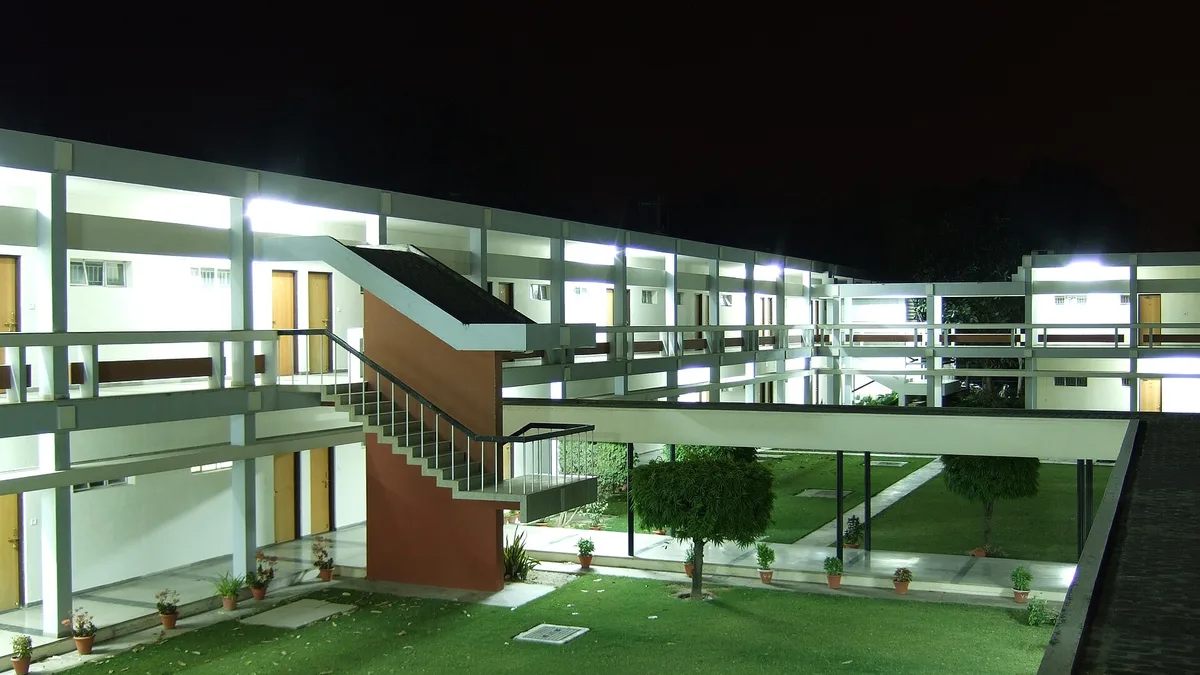
IIT Kanpur and Rolls-Royce have launched a six-month research project to cut the noise passengers hear inside aircraft cabins. The project, announced on November 25, studies how vibrations from an engine travel through the body of an aircraft and turn into cabin noise. The work will run on a test rig at IIT Kanpur, where researchers will build an experimental fuselage model and test a noise-prediction method developed by Rolls-Royce.
How the test rig works
The setup imitates an aircraft in flight. A mechanical vibration source stands in for the engine, and acoustic and vibration sensors record how the shaking moves through the fuselage and into the cabin. The project focuses on structure-borne noise, which starts as vibration in the structure rather than sound in the air. By tracking that path, the team wants to learn how much of the noise in a cabin arrives through vibration, and where it can be stopped.
Project at a glance
| Detail | What is known |
|---|---|
| Partners | IIT Kanpur and Rolls-Royce |
| Duration | Six months |
| Announced | November 25, 2026 |
| Focus | Engine vibration-related noise in aircraft cabins |
| Method | Experimental fuselage model with a vibration source and sensors |
| Student angle | Internships and knowledge-sharing initiatives |
| Next step | Further phases based on first-phase findings |
The project was launched at IIT Kanpur in the presence of Prof Abhay Karandikar, a member of NITI Aayog, institute director Prof Manindra Agrawal, and Rolls-Royce representatives Andy Rix and Raghavendra Saroor. It follows a memorandum of understanding that Rolls-Royce India and IIT Kanpur signed earlier this year, covering research, joint projects, internships, knowledge exchange and skill development. This is the first phase of the work, and later phases will depend on what the first six months show.
Prof Manindra Agrawal, director of IIT Kanpur, said: “The Engine Vibration-Related Noise project offers an opportunity to investigate an important aspect of aircraft cabin comfort through a combination of numerical methodology and experimental validation. By establishing and using the experimental test rig at IIT Kanpur, the teams will work to generate reliable insights to inform further research into vibration transmission and noise-reduction strategies.”
What students get out of it
Students stand to gain directly from the partnership. Sashi Mukundan, executive vice president of Rolls-Royce India, said the company is advancing internships and knowledge-sharing initiatives to give students hands-on experience with real engineering problems. Students interested in the institute can check the official IIT Kanpur website for updates.
Why cabin noise is hard to fix
Cabin noise is one of the first things passengers notice on a long flight, and it is a design problem for aircraft makers as much as a comfort issue. Rolls-Royce engines such as the Trent XWB already carry noise-reduction features. The IIT Kanpur work should give engineers a clearer picture of how much of that noise arrives through vibration, which decides where soundproofing and design changes do the most good. Research output and industry partnerships also count in how Indian institutes are ranked, and our guide to the NIRF rankings explains how those scores are put together.
Frequently asked questions
What is the IIT Kanpur-Rolls-Royce project about?
It is a six-month research project on engine vibration-related noise, announced on November 25, 2026. Researchers will build an experimental fuselage model at IIT Kanpur and test a Rolls-Royce method for predicting how vibration turns into cabin noise.
How long will the project run?
Six months. It is the first phase of the research collaboration, and later phases will depend on the findings.
Will IIT Kanpur students get internships from it?
Yes, internships and knowledge-sharing initiatives are part of the partnership. Rolls-Royce said it is advancing both so students get hands-on experience with real engineering problems.
What is structure-borne noise?
It is noise that reaches passengers as vibration travelling through the aircraft structure, rather than as sound travelling through the air. The project studies how engine vibrations move through the fuselage and affect the cabin.
Sources: Careers360, Fortune India