IIT-IIM drug screening finds 7 cases as only 1.7% of IIT students volunteer
By TUF News Desk · Published 10 November 2026 · 4 min read
Fact-checked against 2+ independent sources · Editorial policy
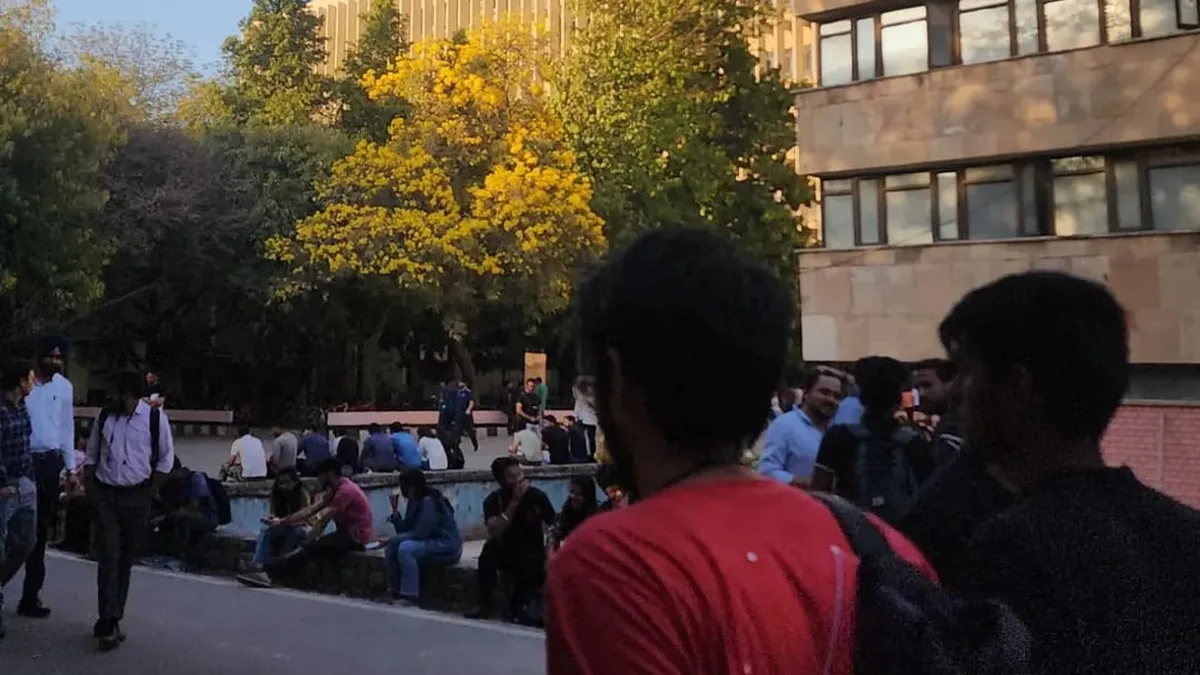
Seven students have tested positive for drugs in the first screening drive across the IITs and IIMs. The figure comes with a large caveat. Only 452 of the 26,298 students enrolled at the IITs volunteered for the test, and 1,838 of 9,867 IIM students took part. The Telegraph reported the numbers on November 10, putting participation at 1.7% at the tech schools and 18.6% at the business schools.
As of October 23, 15 of the 23 IITs and 15 of the 21 IIMs had carried out the tests. Five of the seven confirmed cases were at IITs and two at IIMs. The drive also covers the Central University of Punjab.
How the screening works
The tests are voluntary urine tests, run under a standard operating procedure drawn up by the National Drug Dependence Treatment Centre at AIIMS. Students give a sample, and the result stays confidential. It cannot be used to suspend a student, deny hostel accommodation or cancel an admission. Students who test positive are offered counselling, medical help and rehabilitation support.
The programme sits inside the Narcotics Control Bureau’s Vision Document 2026-29, which aims to screen close to 10 lakh students over three years across about 170 centrally funded institutions. It will run in three phases, starting with the IITs, IIMs and central universities.
Why so few students signed up
IIT students were far more reluctant than their IIM peers to volunteer, and the gap matters because a screening drive only works if enough people take part. Prof. Dheeraj Sanghi, dean of student affairs at Ashoka University, told The Telegraph that drug use on campuses is hard to spot because users rarely admit it until a health problem forces the issue. He also pointed out that some drugs do not show up in a normal urine test, and that institutes still have to work out how to handle students who need admission to a de-addiction centre.
Prof. Sourav Pal, also at Ashoka University and a former director of IISER Kolkata, cautioned against reading too much into the count. With so few students tested, he said, it is hard to estimate how widespread drug use really is from one round of results.
Not everyone agrees the drive should stay voluntary. A parent told The Telegraph that students should give an undertaking at admission and that the test should be made mandatory if campuses are to be rid of substance abuse.
What happens next
The government plans to extend screening to the NITs, IISERs, the Schools of Planning and Architecture and other centrally funded technical institutions in 2027-28, and to all central and deemed universities in 2028-29.
Some institutes are already setting up their own machinery. IIT BHU formed a nine-member committee on October 8 to run urine-based tests for newly admitted students across its BTech, MTech, integrated dual degree and PhD programmes. IIM Calcutta has told incoming students to submit a recent urine-based test report at registration, along with a medical fitness certificate, as set out in its official notice on urine-based drug testing.
What students should know
For now, the test is voluntary and confidential, and the result has no bearing on admission, academics or hostel allotment. Students who are worried about their own use, or a friend’s, can ask for counselling through their institute’s health services rather than waiting for a screening round. Those weighing offers from different institutes can use our guide to choosing a university in India to compare campus support services alongside academics and fees.
Frequently asked questions
How many students tested positive in the IIT-IIM drug screening?
Seven confirmed cases were found as of October 23, 2026: five at the IITs and two at the IIMs.
Is the drug test at IITs and IIMs mandatory?
No. Participation is voluntary, and students give their consent before a urine sample is taken.
Will a positive drug test affect admission, academics or hostel allotment?
No. Results are kept confidential and cannot be used for suspension, expulsion, denial of hostel accommodation or cancellation of admission. Students who test positive are offered counselling, medical help and rehabilitation support.
Which institutes will the screening cover next?
The government plans to extend it to the NITs, IISERs, Schools of Planning and Architecture and other centrally funded technical institutions in 2027-28, and to all central and deemed universities in 2028-29.
Sources: The Telegraph, Zee News, Jagran Josh