IIT Hyderabad startup shows PM Modi its homegrown 5G, satellite tag and pre-6G work
By TUF News Desk · Published 29 October 2026 · 4 min read
Fact-checked against 2+ independent sources · Editorial policy
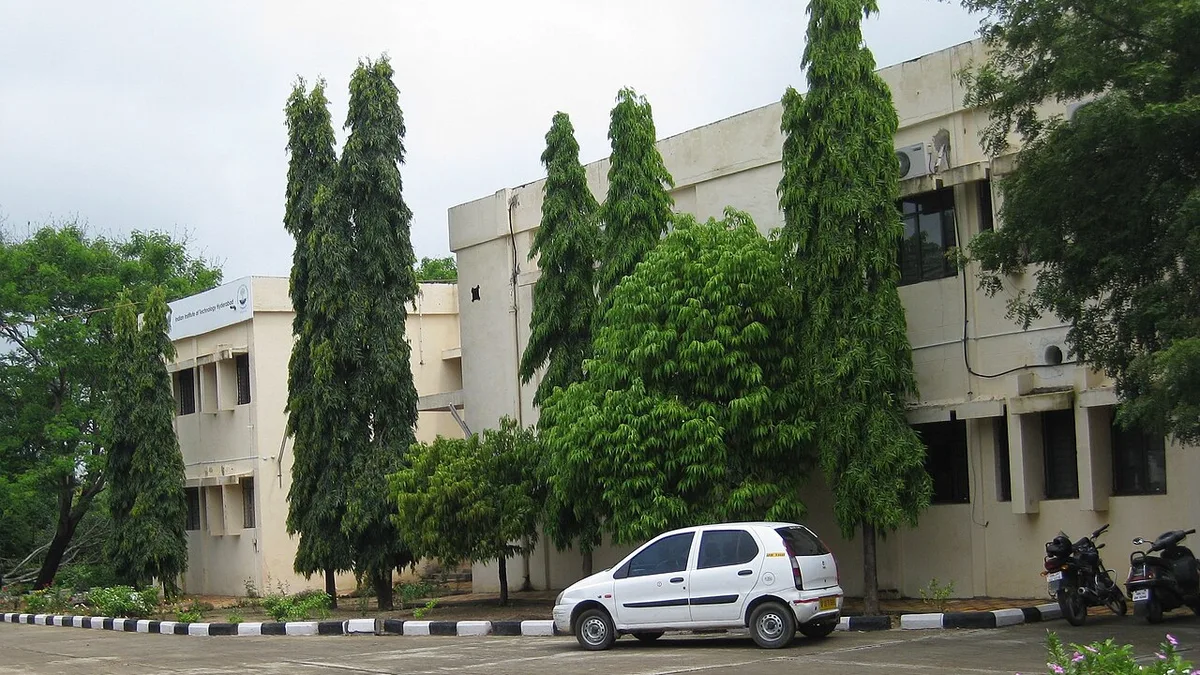
Prime Minister Narendra Modi stopped at a startup stall in New Delhi this week and watched technology built out of an Indian campus lab. The stall belonged to WiSig Networks, a telecom startup incubated at the Indian Institute of Technology Hyderabad, and the visit took place at the Emerging Science, Technology and Innovation Conclave (ESTIC) 2026 at Bharat Mandapam.
The conclave, inaugurated by Modi on October 27, ran for three days under the theme “Creative Minds, Catalysing Science, Empowering Technologies”. It brought together scientists, policymakers, industry representatives and deep-tech startups, with about 150 startup stalls spread across 12 thematic areas. WiSig was one of the stalls Modi visited, and the team walked him through work developed through the institute’s research ecosystem.
A tag for places with no signal
The demonstration that drew the most attention was the Koala Tag. It is a compact device that connects through terrestrial mobile towers and satellites, so a user does not need a conventional mobile signal to reach help. With an existing phone, a person in a remote area can send messages, share a location and seek emergency assistance.
WiSig said the device could help fishermen working far offshore and defence personnel posted in border regions, two groups for whom a lost signal can quickly become a safety problem. The point of the design is practical rather than flashy: it uses the phone people already carry and adds a satellite link for the stretches where towers do not reach.
Rural 5G, built in India
The second demonstration was closer to everyday life. WiSig showed indigenous 5G networks deployed in rural India, providing high-speed connectivity to households and public institutions in underserved villages. The networks serve gram panchayats, anganwadis and schools, places where a reliable connection changes how classes, health information and government services reach people.
For students, that detail matters more than the headline technology. A campus startup that can put a working network into a village school is doing something different from a company that only shows a prototype at a trade fair. The networks on display were described as operational, not as a future plan.
The pre-6G waveform
Modi also asked about 6G work at IIT Hyderabad and WiSig, and the team briefed him on OTFDM, an emerging pre-6G waveform invented and demonstrated by researchers at the institute and the company. A waveform is, in simple terms, the shape a radio signal takes when it carries data, and work on the next generation starts years before any commercial network appears.
The presentation was led by Sakshama Ghoslya, principal engineer at WiSig Networks and an MTech alumnus of IIT Hyderabad. That link between the institute and the startup runs through the whole story: the research, the people and the company grew out of the same campus ecosystem.
For readers weighing where to study or research, the episode is a useful example of what an institute’s incubation setup can produce. Our guide to choosing a university in India looks at how to judge that kind of research environment, and the scholarships guide lists funding options for students who want to work in research. More about the institute is published on the official IIT Hyderabad website.
Frequently asked questions
What did WiSig Networks show Prime Minister Narendra Modi at ESTIC 2026?
Indigenous 5G networks for rural India, the satellite-linked Koala Tag device, and OTFDM, an emerging pre-6G waveform developed by IIT Hyderabad researchers and WiSig.
What is the Koala Tag?
A compact device that connects through terrestrial mobile towers and satellites, so users in remote areas can send messages, share their location and seek emergency help using an existing phone.
What is ESTIC 2026?
The Emerging Science, Technology and Innovation Conclave, held at Bharat Mandapam in New Delhi from October 27 to 29, 2026, with about 150 deep-tech startup stalls across 12 thematic areas.
Who presented the WiSig demonstrations?
Sakshama Ghoslya, principal engineer at WiSig Networks and an MTech alumnus of IIT Hyderabad.
Sources: The Times of India, The New Indian Express, Telangana Today