IIT BHU hosts C-DOT's 6th telecom centre for 6G, AI and quantum research
By TUF News Desk · Published 24 October 2026 · 4 min read
Fact-checked against 2+ independent sources · Editorial policy
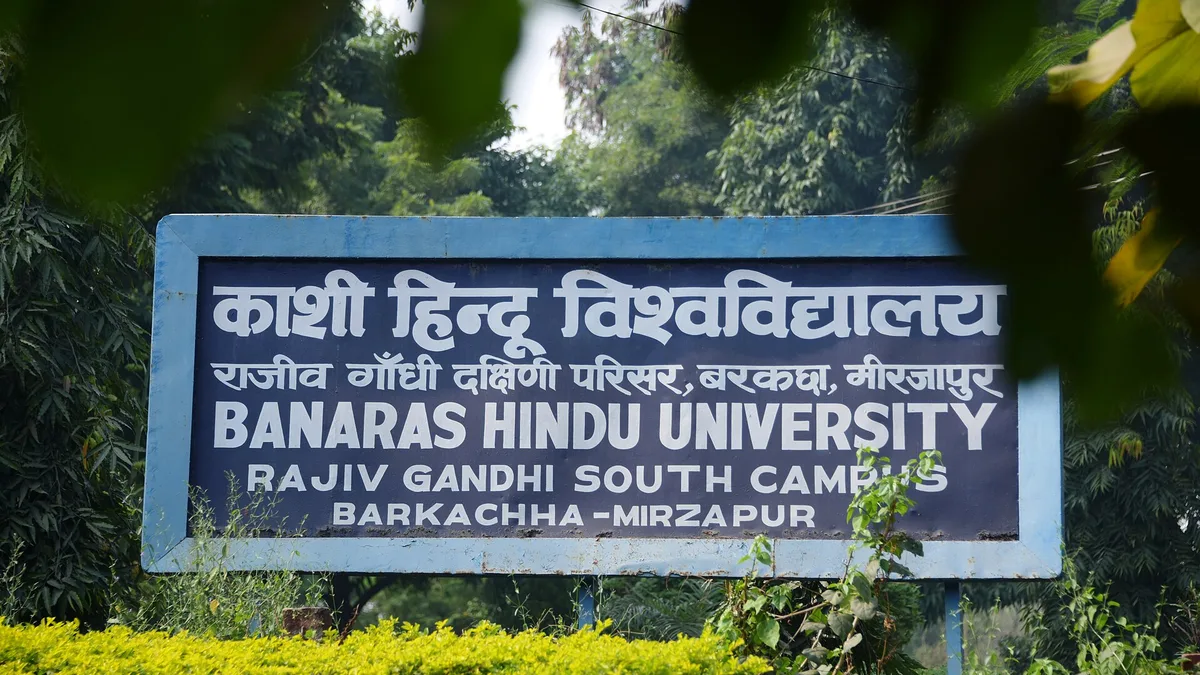
Varanasi has a new address for telecom research. The Centre for Development of Telematics (C-DOT) and the Indian Institute of Technology (BHU) signed a memorandum of understanding on October 23, 2026, to set up a Centre of Excellence on the Varanasi campus, inaugurated the same day.
C-DOT is the telecom research and development centre of the Department of Telecommunications, under the Ministry of Communications, which announced the partnership. The MoU was signed in the presence of C-DOT executive vice president Dr Pankaj Kumar Dalela and IIT (BHU) director Professor Amit Patra, along with faculty members and senior officials from both sides.
The stated purpose is practical. The centre gives researchers, faculty, students and C-DOT engineers a shared platform for joint research, technology development and training, and a route for turning academic work into technology that can be used in India’s networks.
What the centre will work on
The research agenda covers the technologies behind the next round of mobile networks. On the wireless side, the centre will work on 5G Advanced and 6G, very large-scale multiple-input multiple-output (MIMO) systems that use many antennas to carry more data, and integrated sensing and communication, where a network both transmits data and senses its surroundings.
Two other strands run through the plan. One is AI-native communication networks, in which artificial intelligence is built into how networks are designed and run. The other is quantum and post-quantum communication, covering both communication based on quantum physics and security methods meant to hold up once quantum computers arrive. Cybersecurity sits across all of it.
The sixth centre in a national network
The Varanasi centre takes C-DOT’s network of academic Centres of Excellence to six. The existing partners are IIT Kanpur, IIT Gandhinagar, IIT Roorkee and IIT Hyderabad, plus the Indian Institute of Science (IISc) Bengaluru through its Foundation for Science, Innovation and Development.
For IIT (BHU) itself, the partnership adds a direct line into national telecom research. Its students and researchers will work on problems from the organisation building India’s indigenous telecom technology, not only on classroom or laboratory exercises. C-DOT chief executive Dr Rajkumar Upadhyay called the centre an investment in India’s future technology capabilities, while Professor Patra said it would let students and researchers work on real telecom challenges and turn academic research into usable solutions.
What this means for students
Read the announcement for what it is: a research collaboration, not a new course. It does not change how students get into IIT (BHU), nor does it create seats, scholarships or a new degree. BTech admission continues through JEE Advanced.
What it does change is the research environment on campus. Students interested in wireless engineering, network security or AI-driven communication systems will have a centre on campus devoted to that field, with C-DOT engineers as collaborators. For undergraduates, that usually shows up as project topics, internships and final-year work connected to live research.
It is also a useful signal for aspirants choosing between institutes. Research partnerships of this kind say something about where an institute’s faculty actually spend their time, and that is worth weighing alongside placements and rankings. The how to choose a university in India guide covers how to weigh research culture against other factors before locking in a preference.
More detail on the partnership is available from the C-DOT official website and the IIT (BHU) official website.
Frequently asked questions
What is the new C-DOT centre at IIT BHU?
It is a Centre of Excellence for joint research in next-generation telecom technologies, set up by C-DOT with IIT (BHU) Varanasi under an MoU signed on October 23, 2026.
What will the centre research?
Its stated areas are 5G Advanced and 6G, very large-scale MIMO systems, integrated sensing and communication, AI-native networks, and quantum and post-quantum communication, along with cybersecurity.
Is this C-DOT’s first Centre of Excellence?
No, it is the sixth. C-DOT already has centres with IIT Kanpur, IIT Gandhinagar, IIT Roorkee, IIT Hyderabad and IISc Bengaluru through FSID.
Does the centre change admissions at IIT BHU?
No. The announcement covers research collaboration, not a new course or admission route. BTech admission at IIT (BHU) continues through JEE Advanced.
Frequently asked questions
What is the new C-DOT centre at IIT BHU?
It is a Centre of Excellence for joint research in next-generation telecom technologies, set up by C-DOT with IIT (BHU) Varanasi under an MoU signed on October 23, 2026.
What will the centre research?
Its stated areas are 5G Advanced and 6G, very large-scale MIMO systems, integrated sensing and communication, AI-native networks, and quantum and post-quantum communication technologies, along with cybersecurity.
Is this C-DOT's first Centre of Excellence?
No, it is the sixth. C-DOT already has centres with IIT Kanpur, IIT Gandhinagar, IIT Roorkee, IIT Hyderabad and IISc Bengaluru through FSID.
Does the centre change admissions at IIT BHU?
No. The announcement covers research collaboration, not a new course or admission route. BTech admission at IIT (BHU) continues through JEE Advanced.
Sources: NDTV, The Statesman, Jagran Josh