IIT Delhi hosts BHASHINI's multilingual AI push to open research in 36 Indian languages
By TUF News Desk · Published 25 October 2026 · 3 min read
Fact-checked against 2+ independent sources · Editorial policy
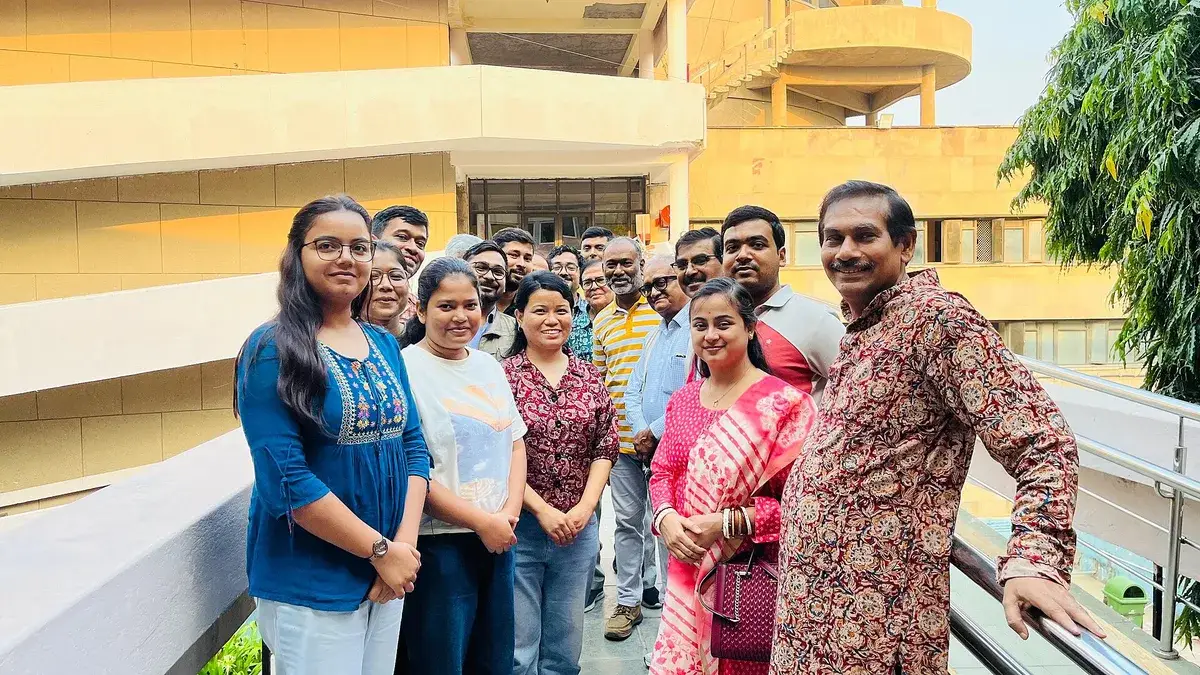
A thesis written in one Indian language often stays unread everywhere else. That is the gap the Digital India BHASHINI Division took to Indian Institute of Technology Delhi this week, at a symposium devoted to electronic theses and dissertations.
The division took part in the 29th International Symposium on Electronic Theses and Dissertations, ETD-2026, held at IIT Delhi from October 23 to 25. The event theme was “ETDs in the age of AI”, and BHASHINI’s session fit squarely into it: how to stop research from staying locked inside a single script or working language.
What the workshop showed
Baishali Chakraborty, speaking for the division, ran a session titled “Workshop on AI BHASHINI: Bridging Divides and Increasing Productivity”. The session covered the division’s language-first digital public infrastructure and how it can support universities, libraries and research repositories.
The tools on show were practical ones: voice-first multilingual AI, speech-to-text, translation, optical character recognition and document translation. A live demonstration of Shrutlekh, the division’s transcription tool, turned speech into text in real time while translating it at the same time. The division pointed to lecture halls, research seminars, conferences and academic discussions as places where that combination could be used straight away.
For students and researchers, the pitch is simple. A thesis or dissertation is often the most original work a university produces, and it is also among the least read, partly because of language. Translation and transcription tools applied to repositories could change who finds that work and who can build on it.
The numbers behind the claim
The division says its ecosystem now supports 36 Indian languages for text and 23 for voice, along with 35 international languages. It also says it has recorded over 10 billion AI inferences, a figure that gives some sense of how widely the tools are already being used.
Its website translation plugin is already active on more than 800 government sites. That matters for campuses because the same tools used on government portals can be adapted for repositories, lecture transcription and research documentation.
Harshad Sharma of the division put the case plainly: “Making research and scholarly knowledge accessible across Indian languages is an important step towards a more inclusive knowledge ecosystem.”
Why this matters beyond one event
BHASHINI began in July 2022 as the National Language Translation Mission, run by the Digital India BHASHINI Division under Digital India Corporation. Its stated aim is to let citizens reach digital services and content in their own language. The IIT Delhi showing extends that aim into higher education, where language barriers decide whose research gets read.
For research aspirants weighing where to apply, language support in a university’s repositories is one more thing worth checking alongside supervision and funding. Our guide to choosing a university in India sets out what to look for before applying.
The tools themselves are available through the official BHASHINI portal, and event details sit with IIT Delhi, the host institute.
Frequently asked questions
What is BHASHINI?
BHASHINI is the National Language Translation Mission run by the Digital India BHASHINI Division under Digital India Corporation, part of the Ministry of Electronics and Information Technology. It builds AI tools that translate and transcribe content across Indian languages.
What did BHASHINI show at IIT Delhi?
At ETD-2026, the division ran a workshop on using voice-first AI, speech-to-text, translation, OCR and document translation to make theses and dissertations accessible across languages, including a live demo of its Shrutlekh transcription tool.
How many languages does BHASHINI support?
According to the division, it supports 36 Indian languages for text, 23 Indian languages for voice, and 35 international languages.
Where can students find BHASHINI’s tools?
The division’s tools and platform are available through the official BHASHINI portal at bhashini.gov.in.
Frequently asked questions
What is BHASHINI?
BHASHINI is the National Language Translation Mission run by the Digital India BHASHINI Division under Digital India Corporation, part of the Ministry of Electronics and Information Technology. It builds AI tools that translate and transcribe content across Indian languages.
What did BHASHINI show at IIT Delhi?
At ETD-2026, the division ran a workshop on using voice-first AI, speech-to-text, translation, OCR and document translation to make theses and dissertations accessible across languages, including a live demo of its Shrutlekh transcription tool.
How many languages does BHASHINI support?
According to the division, it supports 36 Indian languages for text, 23 Indian languages for voice, and 35 international languages.
Where can students find BHASHINI's tools?
The division's tools and platform are available through the official BHASHINI portal at bhashini.gov.in.
Sources: IANS, India Education Diary, Orissa Diary