No age bar for LLB now: BCI scraps upper age limit for 3-year and 5-year law courses
By TUF News Desk · Published 9 November 2026 · 4 min read
Fact-checked against 2+ independent sources · Editorial policy
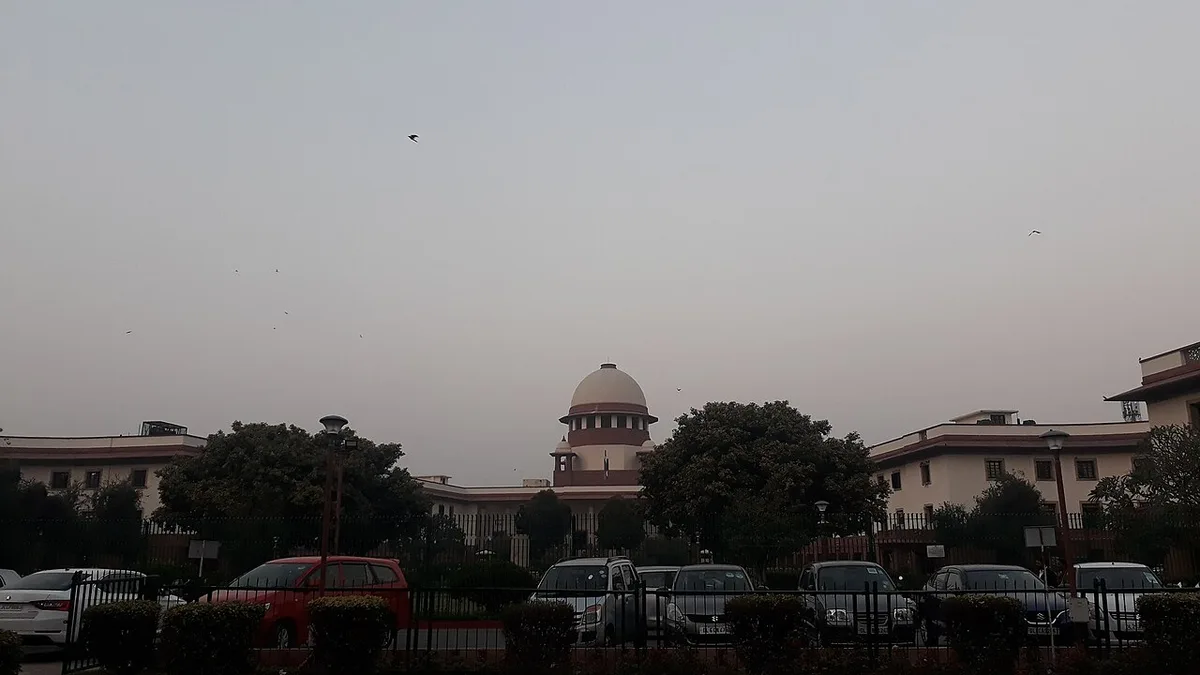
A 40-year-old graduate who wants to study law no longer has to worry about being too old for the classroom. The Bar Council of India (BCI) has withdrawn the upper age limit for admission to three-year and five-year LLB courses, and told the Supreme Court on November 6 that age alone will no longer keep an otherwise eligible candidate out.
The BCI’s General Council passed the resolution on November 5. Advocate Radhika Gautam, appearing for the Council, placed it before a bench of Chief Justice of India Surya Kant and Justices Joymalya Bagchi and V Mohana the next day. The bench then closed the petition that had challenged the limits, holding it had become infructuous.
A case that ran for ten years
The challenge began in 2016, when petitioner Rishabh Duggal questioned a BCI circular that had restored Clause 28 of Schedule III of the Rules of Legal Education, 2008. The clause capped admission to the five-year integrated LLB at 20 years for general-category candidates and 22 years for candidates from Scheduled Castes, Scheduled Tribes and backward communities. A corresponding cap applied to the three-year course.
In March 2017, the Supreme Court stayed the age caps while the case was heard. The limits then stayed in limbo for nearly a decade. On September 25 this year, the bench asked the BCI to state clearly whether it was willing to withdraw them. Six weeks later, the Council did.
Why the Council changed its mind
The resolution followed a reasoned order by former Delhi High Court Chief Justice Rajendra Menon, co-chairman of the BCI’s Legal Education Committee, and a resolution of its Standing Committee on Legal Education.
The Council said an absolute maximum age had too little academic justification. Educational qualifications, attendance, teaching hours, examinations and professional training already protect the standard of legal education, it said, so there was no need to exclude candidates on age alone.
The decision also fits with an earlier ruling in which the Supreme Court struck down a BCI rule that barred enrolment as an advocate after the age of 45.
What changes for aspirants
Anyone who meets the academic requirements can now apply for a law degree at any age. A Class 12 pass-out can join a five-year integrated LLB, and a graduate in any stream can join the three-year LLB.
The change matters most for the five-year course, which students usually join straight after school and where the 20-year cap shut out older applicants entirely. For the three-year course, it helps graduates and working professionals who decide on law later in life.
Entrance tests are unaffected. CLAT remains the gateway to the five-year LLB at 26 National Law Universities, including the National Law School of India University in Bengaluru and NALSAR University of Law in Hyderabad. The CLAT 2027 exam is scheduled for December 6, 2026. Candidates should check the official CLAT 2027 portal for admit cards and instructions, and keep documents ready using our admission documents checklist.
One step is still pending. The reports do not say when the BCI will formally amend its rules or notify colleges and universities, so candidates should watch for the amended rules before the next admission cycle.
Frequently asked questions
Is there any upper age limit for LLB admission in India now?
No. The Bar Council of India has withdrawn the upper age limit for both the three-year and five-year LLB courses, so candidates of any age who meet the academic requirements can apply.
Does the change apply to both the 3-year and 5-year LLB?
Yes. The BCI’s resolution of November 5, 2026 covers both programmes, and the Supreme Court closed the petition challenging the limits on November 6.
Will CLAT 2027 have an age limit?
No age limit has been reported for CLAT 2027. The exam is scheduled for December 6, 2026, and remains the gateway to the five-year LLB at 26 National Law Universities.
When will colleges start admitting students without an age limit?
The BCI has not yet said when it will formally amend its rules or notify colleges and universities, so candidates should watch for the amended rules before the next admission cycle.
Frequently asked questions
Is there any upper age limit for LLB admission in India now?
No. The Bar Council of India has withdrawn the upper age limit for both the three-year and five-year LLB courses, so candidates of any age who meet the academic requirements can apply.
Does the change apply to both the 3-year and 5-year LLB?
Yes. The BCI's resolution of November 5, 2026 covers both programmes, and the Supreme Court closed the petition challenging the limits on November 6.
Will CLAT 2027 have an age limit?
No age limit has been reported for CLAT 2027. The exam is scheduled for December 6, 2026, and remains the gateway to the five-year LLB at 26 National Law Universities.
When will colleges start admitting students without an age limit?
The BCI has not yet said when it will formally amend its rules or notify colleges and universities, so candidates should watch for the amended rules before the next admission cycle.
Sources: The Economic Times, LawTrend, LiveLaw