BCI warning: check your law college's approval before you pay the fee
By TUF News Desk · Published 20 November 2026 · 4 min read
Fact-checked against 2+ independent sources · Editorial policy
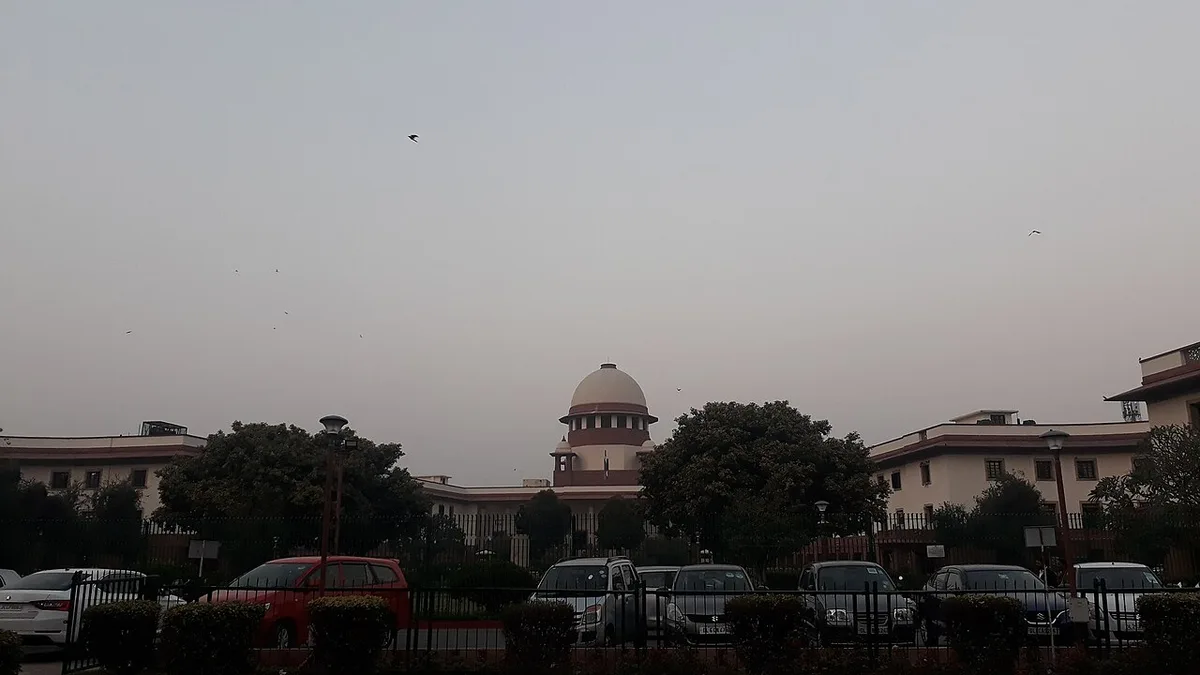
Before you pay a fee or accept a seat in a law college, check whether the course is actually approved. That is what a public advisory from the Bar Council of India (BCI), issued on November 19, 2026, tells every student applying for a three-year LLB or a five-year integrated law programme.
The advisory asks students and parents to verify four things before admission or payment: whether the university is legally established and authorised to run the course, whether the law college is affiliated to that university, whether the BCI has approved the law programme, and whether the approval covers the sanctioned intake for the academic session being offered. A degree from a course without the required recognition or approval can affect whether it is recognised for enrolment as an advocate, the BCI said.
Why the advisory came now
The BCI issued the advisory after the Supreme Court’s order of October 9, 2026, in Ayesha Jain v. Amity University, Noida. The court took note of reports about institutions allegedly operating without the required authenticity and legal authority, and directed the University Grants Commission and other regulators to caution students against taking admission in such institutions. The case named Amity University, Noida as a respondent, but the advisory applies to law colleges across the country.
Affiliation is not approval
The part of the advisory that matters most to applicants is the distinction between affiliation and approval. A university being established by law, a state government granting permission or a No Objection Certificate, or a university granting affiliation to a law college does not by itself mean the BCI has approved the course. Under Rule 14 of the Rules of Legal Education, 2008, a Centre of Legal Education offering a law degree that qualifies graduates for enrolment as an advocate must have BCI approval.
The BCI also warned students not to assume that approval carries over. Approval granted for one programme, academic session, section or intake should not be treated as approval for another. Students should check that the approval matches the exact course and year they are joining. Applying for approval is not approval either: submitting an application, paying the prescribed fee, undergoing an inspection, or having a proposal pending before the BCI cannot be presented as a grant of approval.
What colleges have been told
Institutions have been warned too. Universities, law colleges, admission agencies and people acting for them must not make misleading claims about recognition, affiliation, approval status or sanctioned intake. They must make accurate details of their legal status, affiliation, BCI approval, approved courses, sanctioned intake and applicable sessions easily available to aspirants, and give the advisory wide publicity. The advisory was signed by BCI Principal Secretary Srimanto Sen.
How to check a college
Check the BCI’s official website, which lists approved institutions and courses, and the records of the affiliating university. If anything is unclear about an institution, a course, the sanctioned intake or the session, get clarification from the council through its officially notified channels before admission is finalised. The list is published on the official Bar Council of India website.
Students applying through CLAT 2027, on December 6, 2026, should run the same check on the college they are allotted. Keep your documents ready with our admission documents checklist before reporting.
Frequently asked questions
What should I check before taking admission in a law college?
Check that the university is legally established, the law college is affiliated to it, and the BCI has approved that specific programme, session and sanctioned intake.
Does university affiliation alone mean a law course is approved?
No. Affiliation by a university, a state government permission or a No Objection Certificate does not replace BCI approval under Rule 14 of the Rules of Legal Education, 2008.
Can a law degree from an unapproved college affect my career as a lawyer?
Yes. A degree from a course without the required recognition or approval can affect recognition of the degree for enrolment as an advocate.
Where can I verify a law college’s BCI approval?
On the BCI’s official website, barcouncilofindia.org, which lists approved institutions and courses, and in the records of the affiliating university.
Frequently asked questions
What should I check before taking admission in a law college?
Check whether the university is legally established, whether the law college is affiliated to it, and whether the Bar Council of India has approved that specific law programme, academic session and sanctioned intake.
Does university affiliation alone mean a law course is approved?
No. The Bar Council of India has said affiliation by a university, a state government permission or a No Objection Certificate does not replace BCI approval under Rule 14 of the Rules of Legal Education, 2008.
Can a law degree from an unapproved college affect my career as a lawyer?
Yes. The BCI has warned that a degree from a course without the required recognition or approval can affect recognition of the degree for enrolment as an advocate.
Where can I verify a law college's BCI approval?
On the BCI's official website, barcouncilofindia.org, which lists approved institutions and courses, and in the records of the affiliating university.
Sources: The Hindu, Careers360, Deccan Chronicle